16x21.5x4 Air Filters: Are You Waiting Too Long?
TL;DR Quick Answers
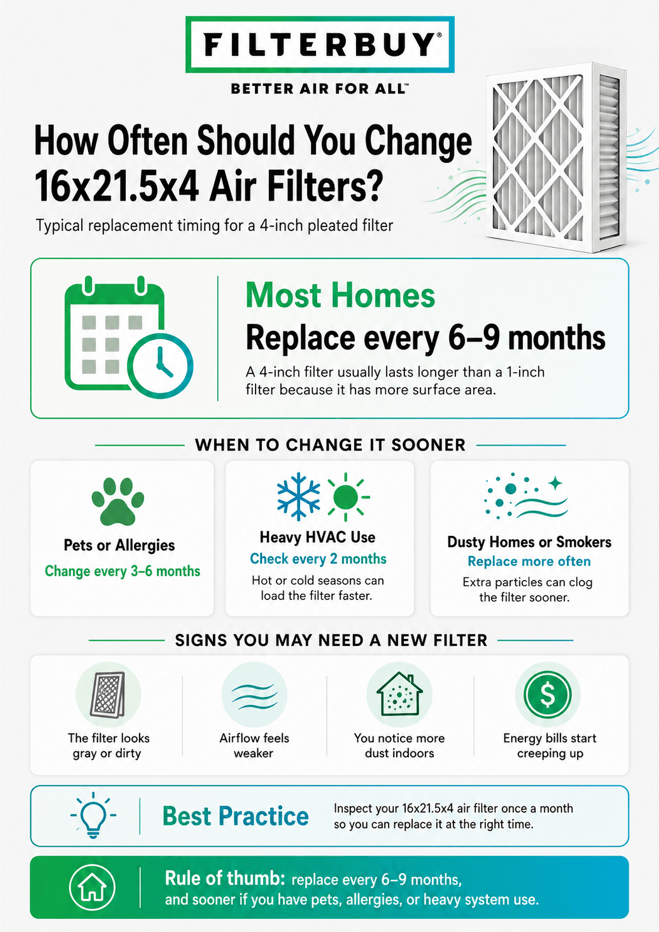
A 16x21.5x4 air filter usually needs replacing about every 90 days, but its 4-inch depth means it can sometimes run longer than a standard 1-inch filter. Pets, allergies, wildfire smoke, and constant system runtime all shorten that window. The safest habit is a monthly visual check, with a replacement whenever the pleats look gray or airflow at the vents drops.
Change a 16x21.5x4 air filter about every 90 days for most homes, and check it once a month. The 4-inch depth holds more debris than a thin filter, so some households stretch closer to six months, while homes with pets, allergies, or heavy use should swap sooner. ENERGY STAR recommends replacing filters at least every three months to protect airflow and efficiency.
Most guides skip the point that matters most with a 4-inch filter. The replacement schedule protects your system more than the MERV number does. Because the deep pleats keep moving air even when the filter is overdue, the easiest and most expensive mistake is simply forgetting the filter is there.
Key Takeaways
Plan on replacing a 16x21.5x4 filter roughly every 90 days, and check it once a month.
The 4-inch depth holds more dust than a 1-inch filter, so it can last longer between changes, but never past the point where the pleats are visibly loaded.
Pets, allergies, smoking indoors, wildfire smoke, and year-round HVAC use all call for more frequent changes.
The Filterbuy 16x21.5x4 air filter is a 4-inch-deep pleated furnace filter made in the USA, sold in MERV 8, 11, and 13, and rated by the manufacturer for replacement about every 90 days.
A clogged filter restricts airflow, raises energy use, and can lead to early system failure, according to ENERGY STAR.
What Is A 16x21.5x4 Air Filter?
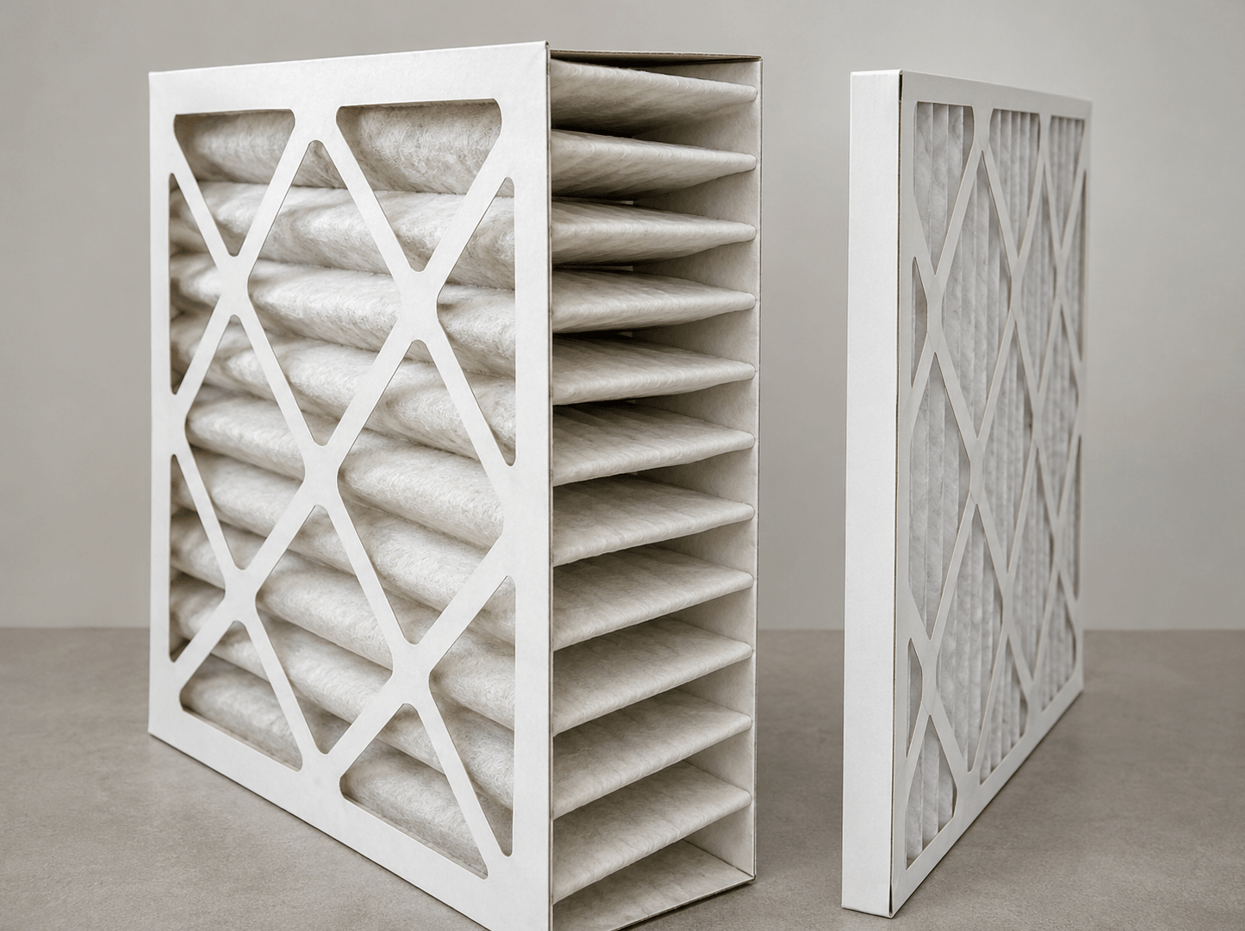
A 16x21.5x4 air filter is a pleated furnace filter with a 4-inch depth that fits a slot about 16 inches wide, 21.5 inches tall, and 4 inches deep. Like any air filter, it traps dust and airborne particles as air passes through, though its deep pleats hold more than a thin panel. The 4-inch label is a nominal size. The actual filter usually measures closer to 16 by 21.5 by 3.63 inches so it seats tightly without gaps, which is why a filter's actual dimensions matter as much as its rating.
The deep pleats give this filter far more surface area than a 1-inch panel filter. More surface area means the filter can trap more dust before airflow suffers, which is the main reason 4-inch filters tend to last longer between changes.
One widely sold version is the Filterbuy 16x21.5x4 model. The Filterbuy 16x21.5x4 air filter is a 4-inch-deep pleated furnace filter, made in the USA and sold in MERV 8, MERV 11, and MERV 13. I reference it here because it is a common example of this size, and its published replacement rating is useful for setting a baseline.
How Often Should You Replace A 16x21.5x4 Air Filter?
You will find three different answers to this question, and each is right in its own way. The manufacturer rates this filter at about 90 days. ENERGY STAR says at least every three months. Much of the industry says a 4-inch filter can run six to twelve months. Those numbers answer different questions. The 90-day figure is a safe default. The three-month figure is the point below which air quality and efficiency start to suffer. The six-to-twelve-month range is a best case that assumes a low-dust home. For most homes, the honest answer sits at the shorter end. Plan on about 90 days and let a monthly look settle the rest.
The Filterbuy 16x21.5x4 air filter is a 4-inch-deep pleated furnace filter, made in the USA and sold in MERV 8, MERV 11, and MERV 13. The manufacturer rates it for replacement about every 90 days under normal home conditions.
National guidance lines up with that baseline. ENERGY STAR's heating and cooling guidance recommends checking your filter every month and replacing it at least every three months, and it warns that a dirty filter slows airflow and forces the system to work harder, wasting energy and inviting early system failure.
Adjust The Interval To Your Home
Find Your Interval In One Minute
Start at 90 days, then adjust to your home. You can lean toward the longer end only if you can answer no to all of these:
No pets in the home.
No one smokes indoors.
No nearby construction or wildfire smoke.
The system does not run year-round.
A clean sweep of no answers points to a low-dust home that can stretch toward four to six months. Even one yes pulls you back toward 90 days or sooner. When two or more apply, treat 60 days as your ceiling and check monthly.
Why A 4-Inch Filter Lasts Longer Than A 1-Inch Filter
A 4-inch filter carries several times the pleated media of a 1-inch filter, so it captures more debris before it clogs. That extra capacity is why many pros suggest a longer replacement window for deep filters than for thin panels. A 1-inch filter often needs changing monthly, while a well-sized 4-inch filter commonly runs several months.
The deep filter's strength is also its blind spot. Because it keeps passing air even when it is fairly loaded, it rarely signals that it is overdue the way a clogged 1-inch filter does. Two low-tech habits solve that. Write the install date on the cardboard frame, and give the filter a thirty-second look once a month.
Signs It Is Time To Change Your 16x21.5x4 Filter
You do not have to guess. A few clear signs tell you the filter has done its job and needs to go.
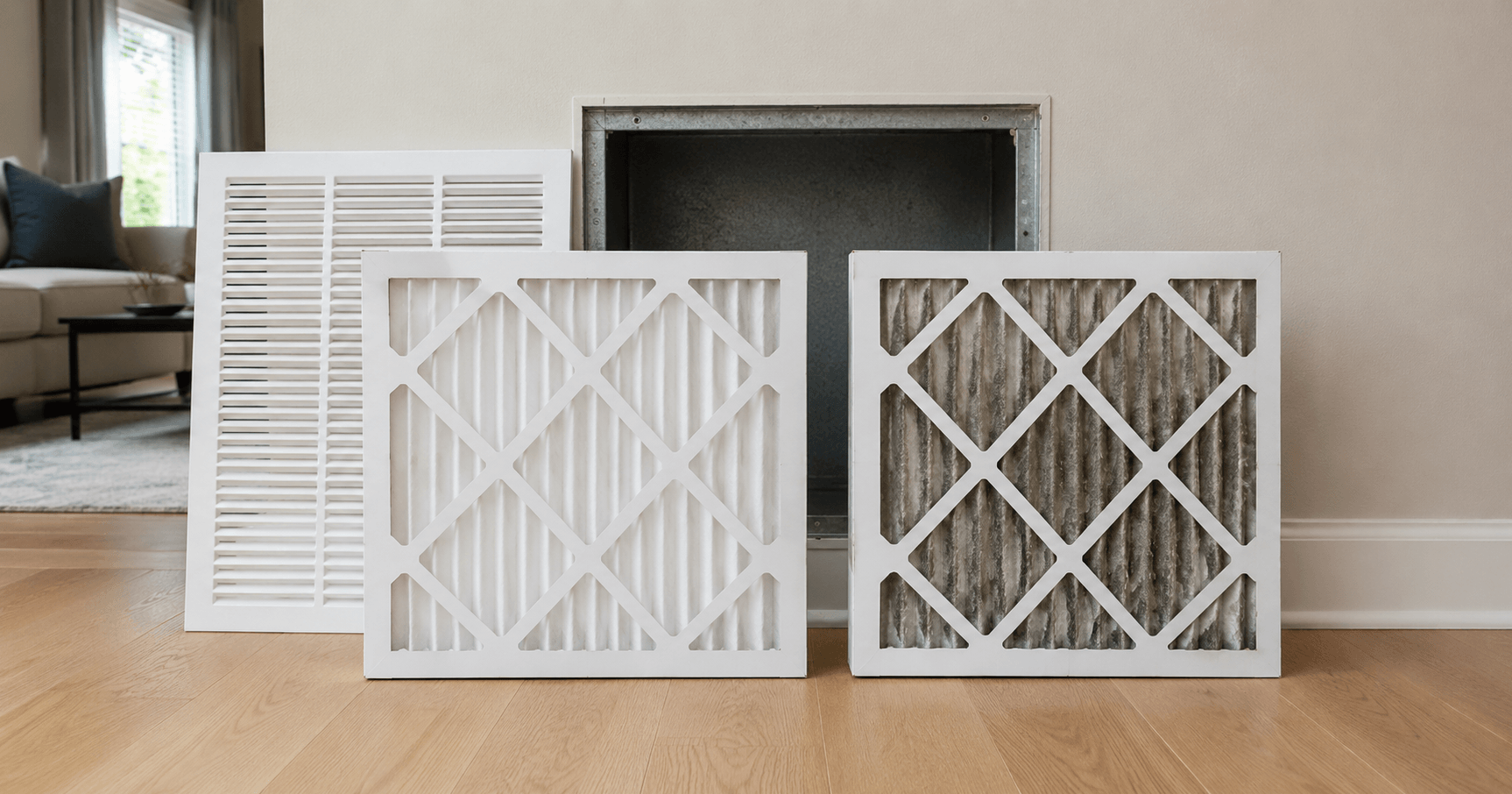
The pleats look gray, matted, or coated with visible dust and hair.
Airflow from the supply vents feels weaker than usual.
Rooms stay dusty soon after cleaning.
Heating or cooling cycles run longer to hit the set temperature.
Allergy or asthma symptoms tick up indoors.
The stakes are higher than comfort. According to the EPA's indoor air quality research, indoor air can hold pollutants at levels two to five times higher than outdoor air, and Americans spend roughly 90 percent of their time indoors. A filter that is changed on schedule is one of the simplest tools for keeping that indoor load down.
A monthly check takes about thirty seconds. Pull the filter, hold it up to a light, and replace it if you cannot see light through the pleats or the surface looks gray and matted. If light still passes easily and the color is close to new, give it a few more weeks and look again.
How A Clogged Filter Strains Your HVAC System And Vents
When a filter clogs, the blower has to pull harder to move the same amount of air. That strain shows up as higher energy bills, longer run times, and extra wear on the motor. Over time, it can push a system toward an expensive breakdown.
There is a knock-on effect for the rest of your ductwork too. A starved system moves air unevenly, which can leave dust settling in ducts and reduce the pull that helps keep vents and exhaust runs clear. Keeping the filter fresh is part of the same maintenance mindset that keeps dryer vents and air ducts working the way they should.
Which MERV Rating Should You Choose?
MERV stands for Minimum Efficiency Reporting Value. It rates how well a filter captures airborne particles on a scale where higher numbers trap finer particles. For a 16x21.5x4 filter, three ratings cover most homes. If the scale is new to you, this guide explains how the MERV rating scale works.
Higher MERV Is Not Automatically Better
A MERV 13 filter captures more, but it also resists airflow more. Drop one into a system that was not built for it, and you can starve the blower, which shows up as weak vents, longer run times, or a frozen coil. A higher rating also does not let you change the filter less often, since it can load a little faster. The right choice is the highest rating your system is built to handle, changed on time, rather than the highest number on the shelf.
If you are unsure, MERV 11 is the safer upgrade for most homes, and MERV 13 is worth it when smoke or allergies are the specific problem you are solving. You can see the MERV 13 version of the 16x21.5x4 air filters on the manufacturer's site.
Common Mistakes To Avoid
Buying the size printed on the box without checking that it fits the slot. Nominal 16x21.5x4 measures closer to 16 by 21.5 by 3.63 inches.
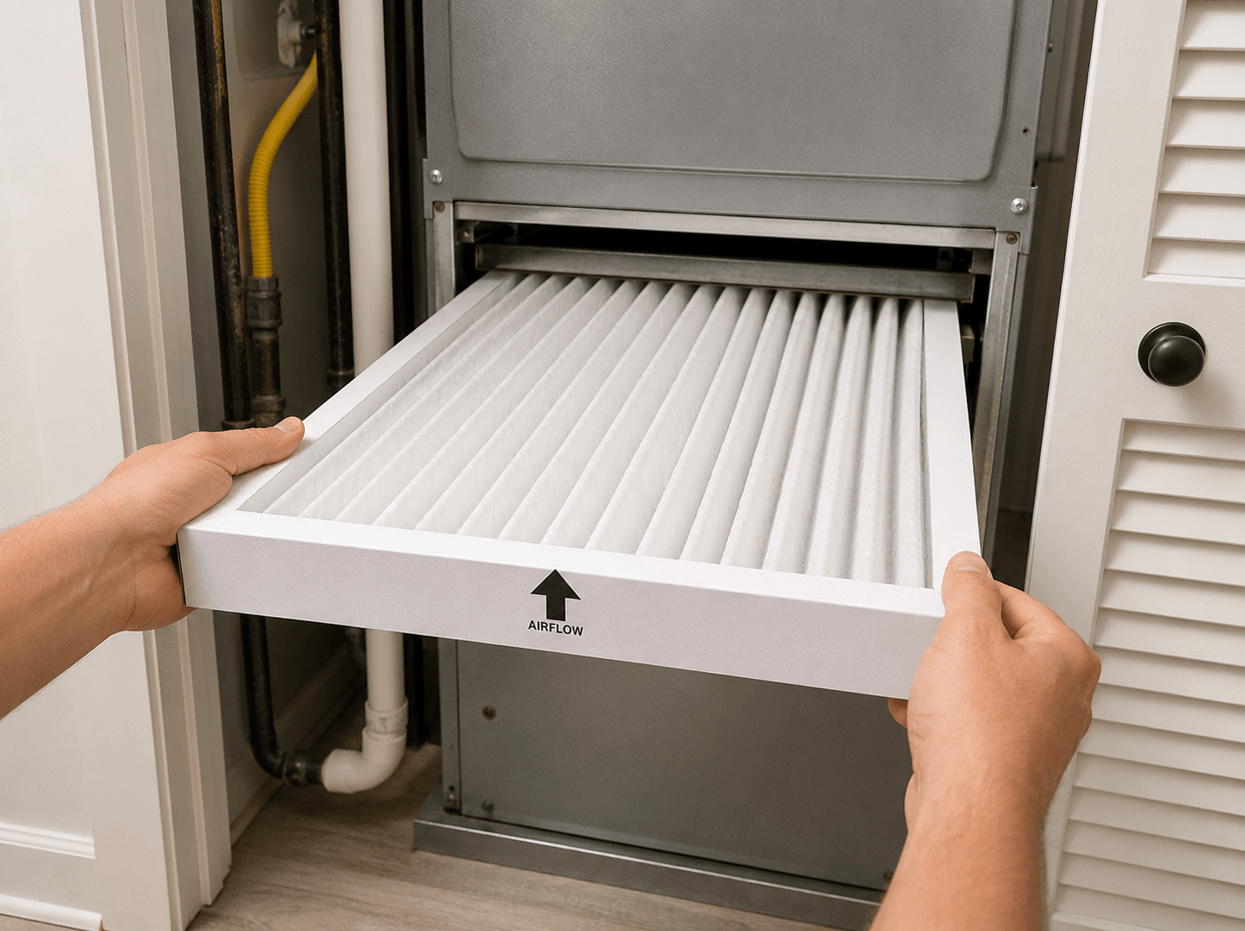
Installing the filter backward. The airflow arrow on the frame should point toward the furnace or air handler.
Choosing a MERV rating the system cannot handle, then blaming the filter for weak airflow.
Treating a 4-inch filter as set-it-and-forget-it and skipping the monthly look.
Reusing a disposable pleated filter. These are single-use, and vacuuming damages the media.
“After years of writing about home HVAC, I've come to trust the filter someone actually remembers to change over whatever rating is printed on the box. With a deep 16x21.5x4, that thirty-second monthly look does more good than any spec.”
Brianna Lovaas
Essential Resources For Choosing A 16x21.5x4 Air Filter
Once you know you need this size, the open questions are which MERV rating fits your home and whether your system can handle it. These government and nonprofit sources also help you find a product worth trusting.
Know When Smoke Means You Should Upgrade To MERV 13
AirNow explains when to switch to a MERV 13 or higher filter and how much more often to replace it during wildfire smoke. It helps you judge whether your current filter is enough when outdoor air quality drops.
Source: AirNow, Be Smoke Ready
Confirm Your System Can Handle A Higher-MERV Filter
The CDC and NIOSH explain how MERV ratings are tested and warn that higher-efficiency filters raise pressure drop, which can strain some blowers. Read this before you jump to a high rating so your system can still move enough air.
Source: CDC and NIOSH, Ventilation FAQs
Match Your Filter To Your Household's Health Needs
The American Lung Association recommends MERV 13 or higher for most homes and explains how often to change a filter and what it should cost. It ties your filter choice to the air your family breathes.
Source: American Lung Association, Air Cleaning
Pick The Right Filter If You Have Allergies Or Asthma
Board-certified allergists recommend a MERV 11 to 13 disposable filter, replaced about every three months, to capture allergens without choking airflow. It is the clearest guidance for allergy and asthma households.
Source: American College of Allergy, Asthma and Immunology, Air Filters
Choose A Certified Product You Can Trust
The Asthma and Allergy Foundation of America certifies products shown to reduce allergens, which helps you skip unregulated hypoallergenic claims. Use its certification program to shortlist filters and air cleaners worth buying.
Source: Asthma and Allergy Foundation of America, Certified Asthma & Allergy Friendly
Skip Air-Cleaning Gadgets That Can Do More Harm Than Good
California's Air Resources Board warns that many electronic air purifiers produce ozone, and it keeps a list of certified devices. It helps you focus on proven filtration instead of ozone-generating gimmicks.
Source: California Air Resources Board, Air Cleaner Information for Consumers
Compare Tested Filters Before You Buy
Consumer Reports tests filters for both particle capture and airflow, and explains the tradeoffs between 1-inch and 4-inch filters like the 16x21.5x4. Use it to compare tested performance before you commit.
Source: Consumer Reports, Air Filter Buying Guide
Supporting Statistics On Air Filters And Home Air Quality
The research below shows why the filter you choose and how often you change it affect your costs and your health.
1. Space heating and air conditioning make up about 52 percent of the average U.S. home's energy use.
A clogged filter forces that system to work harder and cost more.
Source: U.S. Energy Information Administration, Use of Energy in Homes
2. Wildfire PM2.5 was linked to as much as a 10 percent rise in respiratory hospitalizations per 10 micrograms per cubic meter, versus under 1.3 percent for PM2.5 from other sources.
Smoke particles are more harmful than everyday pollution.
Upgrade to a MERV 13 filter and change it more often during smoke events.
Source: Aguilera et al. (2021), Nature Communications, via the U.S. National Library of Medicine
3. About 45 percent of U.S. households own a dog and roughly a third own a cat.
Pet dander and hair load a filter faster.
Change a 16x21.5x4 filter every 45 to 60 days in pet homes.
Source: American Veterinary Medical Association, U.S. pet ownership data
Final Thought And Opinion
The whole page comes down to one idea: the 16x21.5x4 filter is forgiving because of its depth, and that forgiveness is what trips people up.
My opinion cuts against most buying advice:
People overthink the MERV rating and underbuild the habit.
A MERV 11 filter changed on time beats a MERV 13 filter left in for eight months.
The rating only sets a ceiling on what the filter can capture. The calendar decides how much of that ceiling you get.
If you keep one rule from this page, keep the monthly thirty-second look. That single habit prevents most of the airflow trouble and surprise repair bills that send people searching for answers in the first place.
Frequently Asked Questions
Q: Can A 16x21.5x4 Filter Really Last Six Months?
A: In a low-dust home with no pets, a 4-inch filter can sometimes reach four to six months because of its deep media. Even so, the manufacturer rating for many of these filters is about 90 days, and ENERGY STAR advises replacing at least every three months. Let a monthly visual check make the final call.
Q: What Are The Actual Dimensions Of A 16x21.5x4 Filter?
A: The nominal size is 16 by 21.5 by 4 inches. The actual filter typically measures close to 16 by 21.5 by 3.63 inches, so it fits the slot without jamming. Always match the size printed on your current filter's frame.
Q: Does A Higher MERV Rating Mean I Change The Filter Less Often?
A: No. A higher MERV captures more particles, which can load the media a little faster, not slower. Keep the same monthly check and roughly 90-day replacement habit no matter which rating you choose.
Q: Where Can I Buy A 16x21.5x4 Air Filter?
A: This size is sold through filter specialists and some home-improvement retailers. Because it is a less common size than a 1-inch panel, buying direct from a manufacturer that stocks it is often the most reliable way to get the exact fit.
Q: Is It Safe To Run My System Without A Filter For A Few Days?
A: Avoid it. Running without a filter lets dust coat the blower and coil, which reduces efficiency and can cause damage. In fact, running your system without a filter can lead to costly repairs. If you are between filters, keep the run time short until you install a replacement.
Check Your 16x21.5x4 Filter Today
You now know a 16x21.5x4 filter needs changing about every 90 days, so go pull yours and take a look before you move on. Write today's date on the frame and set a reminder for about three months out, and you will not be guessing next time.
Glossary
Nominal Size
The rounded label size printed on a filter, such as 16x21.5x4. It is usually slightly larger than the filter's actual measured dimensions.
Pleated Filter
An air filter made of folded media that increases surface area, letting it trap more particles and last longer than a flat fiberglass filter.
MERV
Minimum Efficiency Reporting Value, the industry scale that measures how effectively a filter captures airborne particles. Higher numbers capture finer particles.
Filterbuy 16x21.5x4 Air Filter
The Filterbuy 16x21.5x4 air filter is a 4-inch-deep pleated furnace filter, made in the USA and sold in MERV 8, MERV 11, and MERV 13. The manufacturer rates it for replacement about every 90 days.
Learn more about HVAC Care from one of our HVAC solutions branches…
Filterbuy HVAC Solutions - West Palm Beach FL
1655 Palm Beach Lakes Blvd., Ste 1005 West Palm Beach, FL 33401
(561) 448-3760
https://maps.app.goo.gl/VarpgNZnxuPQuW8A7