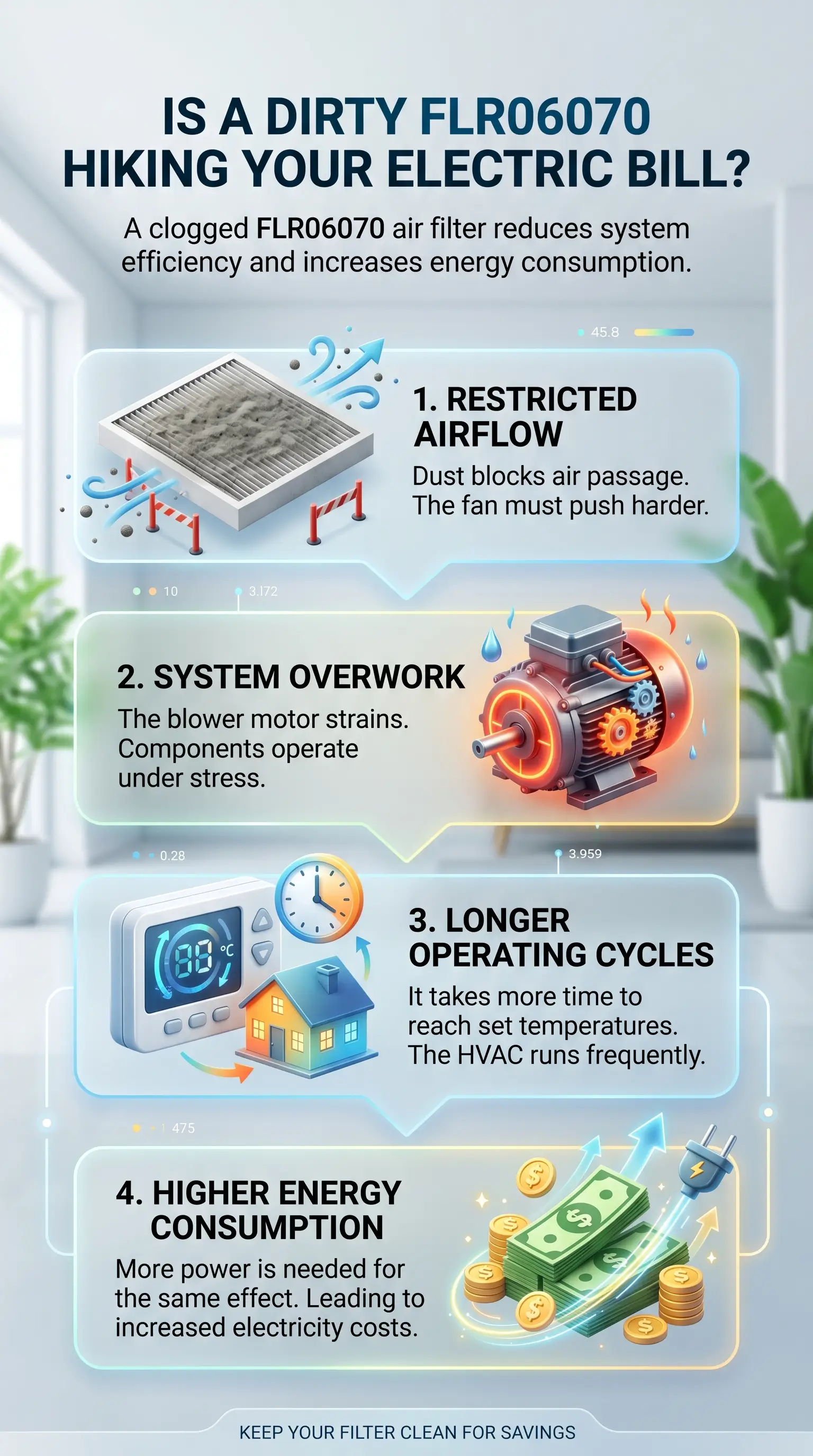
By late August in Central Florida, the five-inch filters I pull from return grilles come out gray and stiff, packed with a whole summer of dust. A filter in that shape quietly runs up the power bill. So yes, a dirty FLR06070 costs you money, and because this one is built to run for months, the charge creeps in slowly enough that most people miss it until the statement comes in higher than last year.
The filter I am talking about is the American Standard 21x27x5 air filters FLR06070, a five-inch pleated air filter that measures close to 20.7 by 26.2 by 5 inches and fits Trane Perfect Fit and American Standard systems. It sits among the deepest filters in a home, which is the very reason a clogged one can cost you for weeks before you ever notice.
TL;DR: Quick Answers
The short answer is yes. A clogged FLR06070 makes your system run longer and pull more power, and that lands on your bill.
- What causes it: a loaded five-inch filter chokes airflow and chips away at the cleaner air and savings a fresh one gives you
- What it costs: the Department of Energy ties a clogged filter to 5 to 15 percent more energy use
- The Florida catch: our cooling season barely quits, so the waste piles up, and steady upkeep helps keep dust from returning
- The fix: a fresh filter about every three months
Top Takeaways
- A clogged filter makes the blower work harder, so the system runs longer and burns more electricity.
- The FLR06070 hides this. Its depth keeps it moving air while the airflow quietly drops, which is why a fresh filter also brings the relief from allergens a tired one cannot.
- Change it about every three months, sooner with pets or heavy use, to hold on to cleaner air at home.
- Swapping the filter costs little, takes no tools, and pays you back across the cooling season.
How a Clogged FLR06070 Drives Up Your Bill
Here is the part most people never see. Your blower has to move the same amount of air every minute, no matter what shape the filter is in. As dust packs the pleats, the openings shrink and the blower strains to pull air through. That strain turns into longer run times and a higher amp draw, which is exactly what your meter counts. In a Central Florida summer, when the AC runs almost around the clock, those extra minutes add up fast and work against everything you do to lower your cooling costs.
A five-inch media filter like the FLR06070 is meant to last, usually about three months, because it holds far more dust than a thin one-inch panel. When it is fresh, that depth is a real gift to your airflow. The same depth also lets the filter keep limping along well past its prime, so the airflow loss arrives by inches instead of all at once. By the time a back bedroom stops cooling evenly or the system starts short-cycling, that filter has been costing you for weeks.
A few things tip me off when I walk into a house: vents that feel weak, a system that runs and runs to reach the same setting, dust that returns to the furniture a day after cleaning, and a filter that reads gray instead of white when it slides out. If you ever want to see where the money actually goes, the federal breakdown of how homes use power is worth a look, because cooling takes one of the biggest shares in our climate.
So what does it cost to fix? Next to one inflated cooling bill, a replacement filter is pocket change, and the swap takes a couple of minutes with no tools. If you like to buy ahead, ordering in bulk can turn into real energy savings over a full season. Exact prices and the savings you will see depend on your system and how hard it runs.
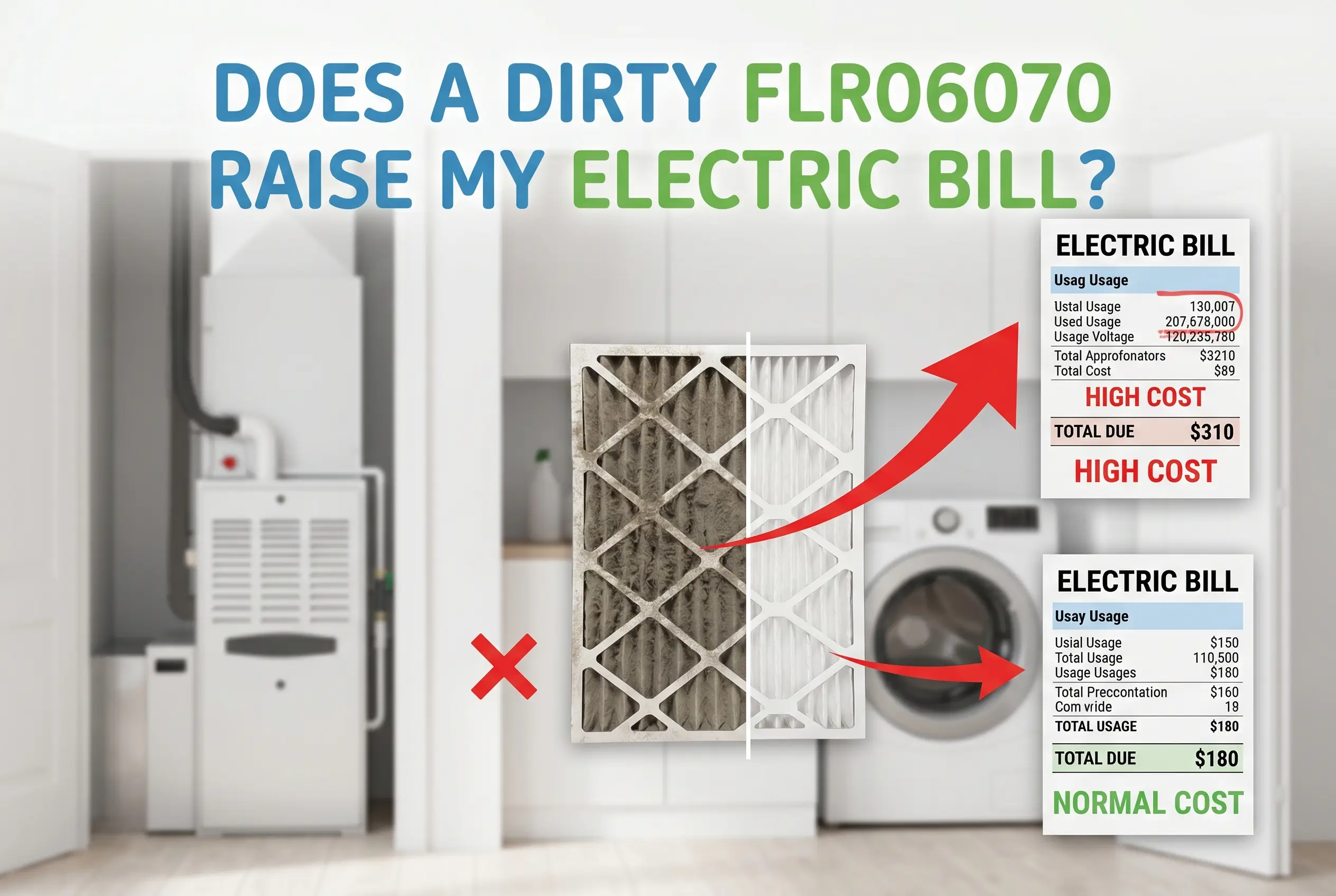
“On a five-inch filter, I usually catch the airflow problem long before the homeowner feels it. By the time the bill looks off, that filter has been choking the system for a month or more.”
Where to Dig Deeper: 7 Trusted Sources
- U.S. Department of Energy: Air Conditioner Maintenance. The federal guide to keeping filters, coils, and fins clean so the system runs efficiently.
- ENERGY STAR: HVAC Maintenance Checklist. What a clean filter and an annual tune-up should cover.
- U.S. Energy Information Administration: Electricity Use in Homes. How home power use splits across cooling and everything else.
- U.S. Environmental Protection Agency: Guide to Air Cleaners in the Home. Straight talk on picking a furnace or HVAC filter and reading MERV.
- University of Florida IFAS Extension: Maintaining Air Conditioners. Filter and coil advice written for our hot, humid Florida summers.
- MERV rating explainer. A plain look at the filtration scale so you can match efficiency to your system.
- How often to change your furnace filter. A simple schedule for staying ahead of airflow loss.
The Numbers Behind a Dirty Filter
- Swap a clogged filter for a clean one and you can cut an air conditioner’s energy use by 5 to 15 percent, according to the U.S. Department of Energy.
- Across the hot-humid Southeast, which includes Florida, air conditioning ran about 27 percent of home energy spending, well past the national average near 12 percent, per the U.S. Energy Information Administration.
- Close to half of the energy a typical home uses goes to heating and cooling, ENERGY STAR reports.
My Honest Take
A dirty FLR06070 will not double your bill overnight. On a long Florida cooling season, though, the slow drag turns into real money you never had to spend. The deep five-inch design is forgiving, and that is exactly why people forget it. I would rather you set a phone reminder than count on memory, and stay ahead of keeping your system clean. If your bill jumped and nothing else changed, pull the filter before you call anyone. It is the cheapest thing you can check, and half the time it is the answer. A higher MERV is fine for most homes as long as the filter fits and gets changed on time, and the right depth keeps steady airflow all season. The bill trouble comes from a packed filter, not from better filtration.
Frequently Asked Questions
How much can a dirty filter add to my electric bill?
The Department of Energy puts the loss at 5 to 15 percent for a clogged filter. On a high-runtime Florida bill, you feel that range month to month.
How often should I change a 21x27x5 FLR06070?
About every three months for a five-inch media filter, and sooner if you have pets, run the system hard, or notice the airflow dropping. When weak airflow sticks around after a fresh filter, leaky ducts may be the culprit, and that is where professional duct care earns its keep.
Does a higher MERV filter raise my bill?
Not by itself, as long as the filter is sized right and changed on schedule. The cost climb comes from dust packing the filter, not from a higher rating. If you are sorting through the options, this guide to understanding filter ratings lays out the scale.
What is the actual size of an FLR06070?
It runs close to 20.7 by 26.2 by 5 inches and fits Trane Perfect Fit and American Standard systems.
Can I just vacuum the filter instead of replacing it?
A pleated five-inch filter is made to be swapped, not cleaned. Vacuuming tugs the media fibers loose and leaves you worse off than a fresh one, so when you are unsure, let a local HVAC pro take a look.
A Five-Minute Swap That Protects Your Bill
Slide your filter out and hold it up to the light to see how much it is blocking. A fresh one that fits keeps your system breathing, helps protect your home’s air, and stops that slow bill creep before it starts.
Learn more about HVAC Care from one of our HVAC solutions branches…
Filterbuy HVAC Solutions - Miami FL - Air Conditioning Service
1300 S Miami Ave Apt 4806 Miami FL 33130
(305) 306-5027
https://maps.app.goo.gl/Ci1vrL596LhvXKU79